THE PLATFORM
The ChatSee Guardian Agent
The missing performance control loop
ChatSee Guardian Agent can be deployed either on-premise or as a SaaS solution to discover and provide continuous oversight over your agents.
From Observability to Behavioral Control and Risk Mitigation
Most Al platforms help you detect issues.
ChatSee prevents the most critical failures: incorrect decisions in production.
Control
Visibility
BEHAVIORAL CONTROL PLANE
Production · Runtime
Chatsee.ai
Continuous learning & enforcement loop
Evaluation Plane · e.g. arize
Measures model quality
Drift, hallucination detection
Development Plane e.g. LangSmith
Debugs prompts, chains & workflows
Infrastructure Plane e.g. Datadog
Monitors latency, errors & system health
Monitor
High-Fidelity Runtime Telemetry.
Capture the complete footprint of agentic behavior across your entire production environment, moving beyond system uptime to deep behavioral insight.
Unified Telemetry
Consolidate interaction logs from custom internal agents and embedded third-party copilots into a single, standardized operational stream.
Execution Traces
Capture the full technical reasoning chain, including tool calls and state changes, to enable deep-dive forensics and root-cause analysis.
Contextual Metadata
Envelop raw logs with environmental data—such as user preferences and operational policies—to provide the "why" behind every agent action.
Detect
Real-Time Behavioral Assurance.
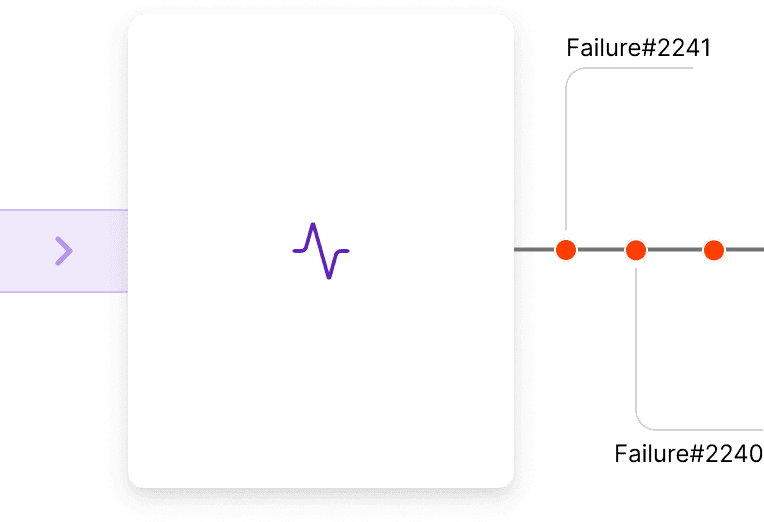
Identify silent, inconsistent failures that traditional monitoring tools miss, ensuring every autonomous action remains within enterprise boundaries.
Behavioral and Governance Deviation
Detect behavioral problems, i.e. Not seeking enough clarification from users, not following steps in sequence. And detect governance policy deviations.
Semantic Drift
Identify silent behavioral shifts where an agent’s logic begins to deviate from its core mission or established operational baseline.
Context gap
Patterns, data structures, workflows for successful trajectiories.
Structure
The Failure Memory™ Architecture.
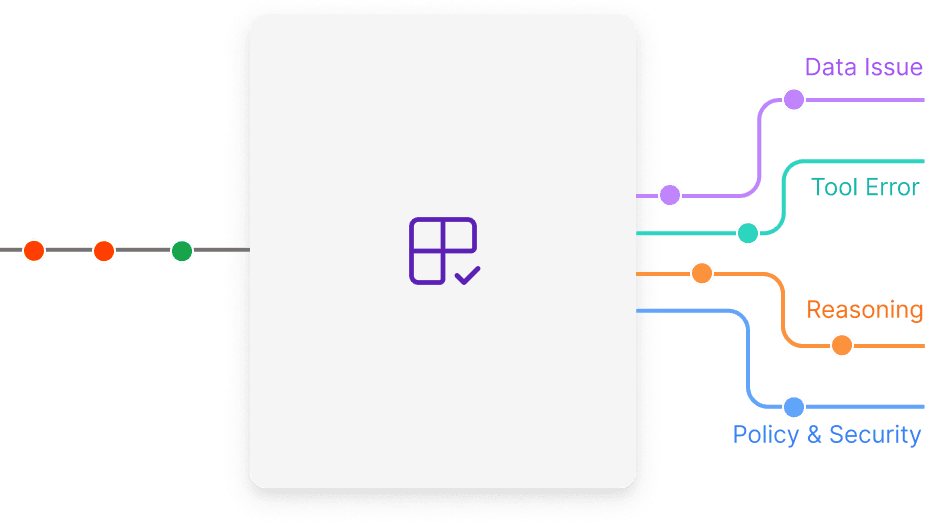
Transform transient, messy production data into a permanent, structured intelligence asset that serves as your organization's institutional knowledge for AI failures.
Behavioral Taxonomy
Standardize transient production anomalies into a structured, searchable classification system for enterprise-wide behavioral health.
Failure Memory™
Build a persistent repository of past incidents to ensure your organization never solves the same AI error twice.
Structure and Pattern Discovery
Automatically discover the data structure, work lows and macro behavioral trends to build context memory for systemic performance improvement.
Improve
Closed-Loop System Hardening.
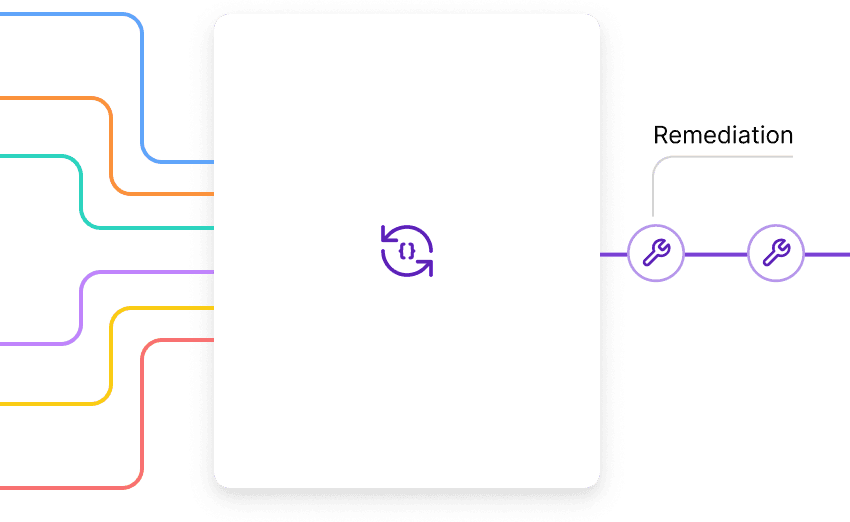
Close the gap between production reality and development, using runtime insights to proactively optimize and secure future agent deployments.
Dynamic Policy Enforcement
Using prompt adaptation steer behavior back towards goal or policy. Unsafe behaviors are blocked.
Regression Harness Alignment to Production Scenarios
Benchmark new model versions against the historical "Failure Memory" to ensure high-fidelity performance before deployment.
Smart usage of human-in-the-loop
Keep humans in control and what goes in production. Remember and auto-remediate future actions based on human preference.
Agent Performance Gains
Quantifying the Impact of Behavioral Intelligence.
Transition from reactive troubleshooting to proactive optimization. By leveraging Failure Memory™, ChatSee enables engineering teams to systematically harden agent logic, turning production failures into a roadmap for superior performance.
Maximized Task Completion
Eliminate the "silent stalls" and logic loops that prevent autonomous agents from reaching successful resolutions, ensuring high-value workflows reach the finish line.
Reduced Human Intervention Rates
Minimize costly hand-offs to human operators by identifying and resolving the specific edge cases that typically trigger service desk intervention.
Elevated User Sentiment
Build long-term trust and brand loyalty by eliminating the behavioral inconsistencies and "hallucinations" that frustrate users and erode confidence in AI interfaces.
Strategic Goal Alignment
Move beyond simple prompt-following to ensure every agent action is tethered to high-level business objectives and enterprise intent.